
As energy costs rise and Québec accelerates its shift toward a greener economy, geothermal energy stands out as a durable and cost-effective solution. This technology still not widely known among the general public uses the earth’s natural heat to efficiently heat or cool a building in an environmentally friendly way.
What Is Geothermal Energy?
Geothermal energy is based on a simple principle: the Earth stores heat from the sun and from its internal layers. Even during Québec’s harshest winters, the ground maintains a relatively stable temperature a few metres below the surface—typically around 8 to 10 °C. This free, renewable energy can be harnessed to heat or cool our buildings. For more on how this energy works, see Geothermal Energy — Natural Resources Canada.
Basic Physical Principle
A geothermal system leverages heat exchange between the ground and a fluid circulating through a network of underground pipes. The recovered energy is transferred to a heat pump, which raises or reverses the temperature depending on the need: heating in winter and cooling in summer.
Québec Context
Thanks to its northern climate, Québec is particularly well positioned to benefit from geothermal solutions. Large seasonal temperature swings support stable, efficient performance especially for residential, commercial and institutional buildings. In addition, Québec’s clean, hydro-based electricity grid powers these systems with already low-carbon energy.
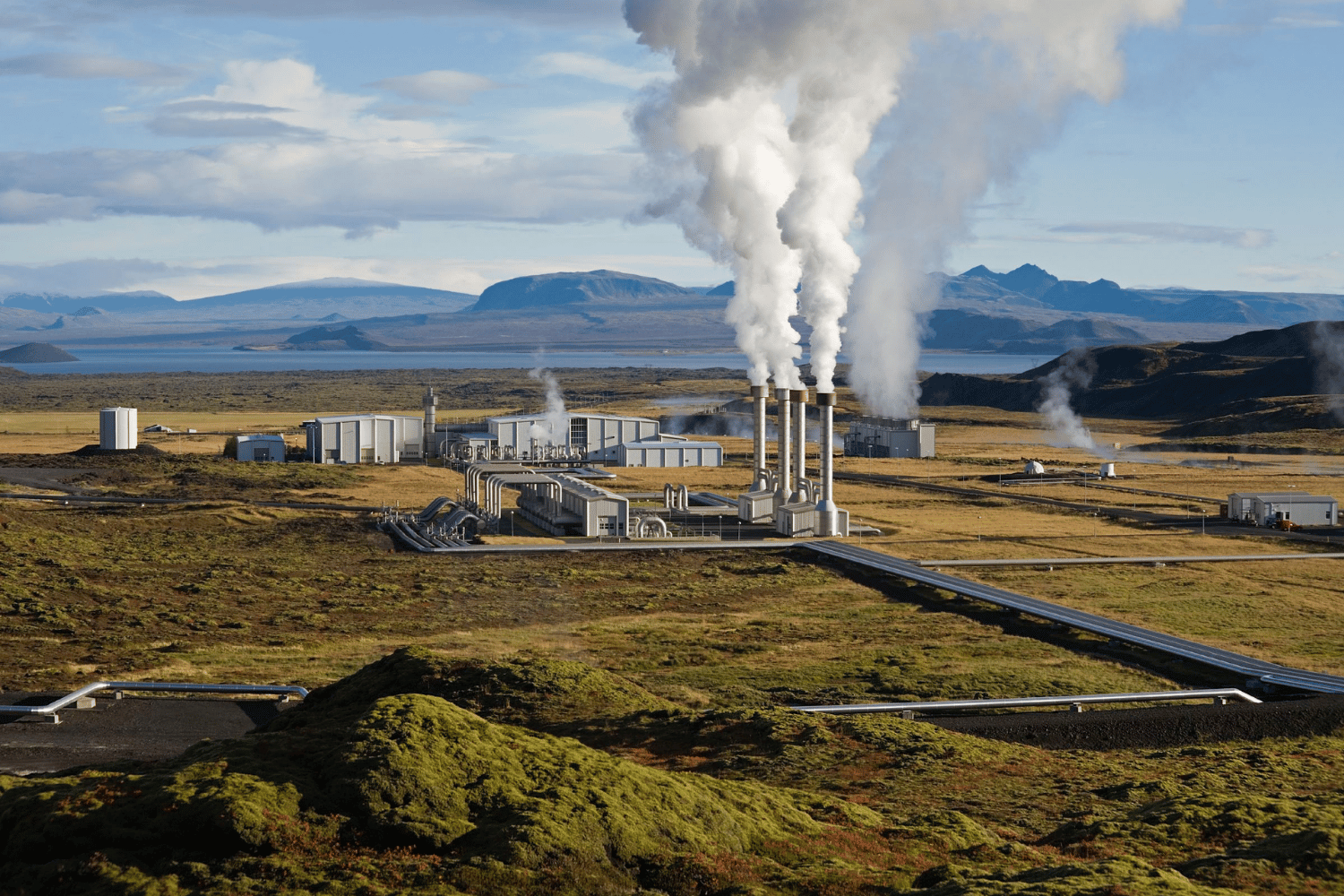
How a Geothermal System Works
Ground Loop & Heat Exchange
The core of the system is the underground capture network, known as the geothermal loop. This loop contains a heat-transfer fluid that absorbs heat from the ground. In winter, this heat is directed to the heat pump, which upgrades it to warm the building’s air or water. In summer, the process reverses: excess indoor heat is transferred back into the ground, acting like a natural air-conditioning system.
Heat Distribution Inside the Building
Once the heat is produced, it is distributed through a forced-air system or radiant floors. This even distribution delivers superior comfort and reduces the temperature swings often seen with traditional systems.
Advantages of Geothermal in Québec
Economic Benefits & Durability
Although the upfront investment is higher than with conventional heating, geothermal can cut annual energy costs by up to 60%. Underground loops often last more than 50 years, and heat pumps typically last 20 to 25 years. Over the long term, this makes for a durable, cost-effective investment.
Lower Emissions & Carbon Footprint
A geothermal system burns no fossil fuels, so it emits no greenhouse gases or air pollutants during operation. Combined with Québec’s clean electricity, it can significantly reduce the carbon footprint of a home or commercial building.
Comfort & Energy Stability
Geothermal offers steady thermal comfort without drafts or noise. It also provides greater independence from fluctuations in electricity and heating-fuel prices—a valuable long-term advantage.
Types of Geothermal Systems
Closed-Loop Systems
This setup uses a sealed pipe network circulating fluid through the ground. The fluid exchanges heat with the soil without direct contact with groundwater. It’s the most common configuration in Québec thanks to low maintenance needs and reliable performance.
Open-Loop Systems
Here, water from a well or aquifer is pumped, used for heat exchange, then discharged. While very efficient, this approach requires suitable water quality and strict environmental checks.
Choosing the Right System
The choice depends on several factors: lot size, soil composition, energy needs and budget. A preliminary energy audit helps identify the best option for each building.
Installation & Maintenance: What to Know
Key Installation Stages
Installing a geothermal system requires specialized professionals. It includes:
- a feasibility study and energy audit;
- drilling or trenching for the loop;
- installing the heat pump;
- connecting to the building’s distribution system.
Depending on project size, this step can take from a few days to a few weeks.
To learn more about our energy efficiency services and ORT Énergie’s end-to-end support, see our Services page.
Maintenance & System Lifespan
Geothermal systems require little maintenance compared to traditional heating. Annual servicing of the heat pump and periodic checks of the heat-transfer fluid are generally enough to keep performance and durability high.

Incentives & Support Programs
Several provincial and federal programs support geothermal in Québec, including:
- Transition énergétique Québec (TEQ): assistance for residential and commercial projects;
- Hydro-Québec: energy-efficiency programs for heating system conversions;
- Natural Resources Canada: incentives for green technology deployment.
ORT Énergie helps clients identify and manage these programs to maximize ROI.
Costs & Profitability of a Geothermal System
Key Cost Factors
A geothermal system’s cost mainly depends on:
- building size;
- soil composition;
- loop type;
- the number of required boreholes.
On average, a complete residential system ranges from $25,000 to $40,000 before incentives.
Return on Investment in Québec
With energy savings and available incentives, payback is typically 7 to 12 years. After that, savings become net gains and can increase property value.
Geothermal & Québec’s Energy Transition
Geothermal’s Role in Carbon Neutrality
The Gouvernement du Québec has committed to carbon neutrality by 2050. Geothermal plays a key role in decarbonizing building heating. For more on provincial energy policy, see the official Government of Québec – Energy page. For a broader overview, also read our article on the energy transition in Québec.
Examples & Local Initiatives
Many municipalities, institutions and developers are already adopting geothermal. Schools, hospitals and residential complexes use this technology to cut energy footprints, proving large-scale feasibility in Québec.
Conclusion
Geothermal is a clean, durable solution tailored to Québec’s climate. By investing in this technology, households and businesses can reduce energy bills while actively contributing to the province’s energy transition. For any sustainable heating project, ORT Énergie provides end-to-end support—from design to commissioning.
FAQ
1. Does geothermal work in winter?
Yes. The ground maintains a stable temperature year-round, enabling optimal operation even during Québec’s deep freezes.
2. Is geothermal suitable for an existing building?
Absolutely. Geothermal can be installed in existing buildings, though a site assessment is needed to confirm feasibility.
3. Can geothermal be combined with other green technologies?
Definitely. It integrates well with solar panels, heat-recovery systems and high-efficiency ventilation to maximize overall performance.